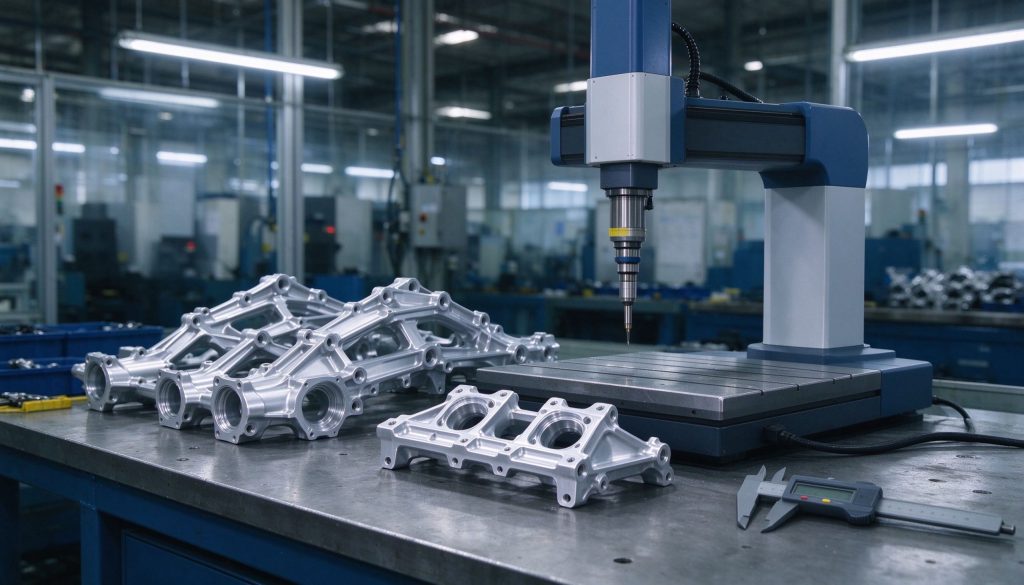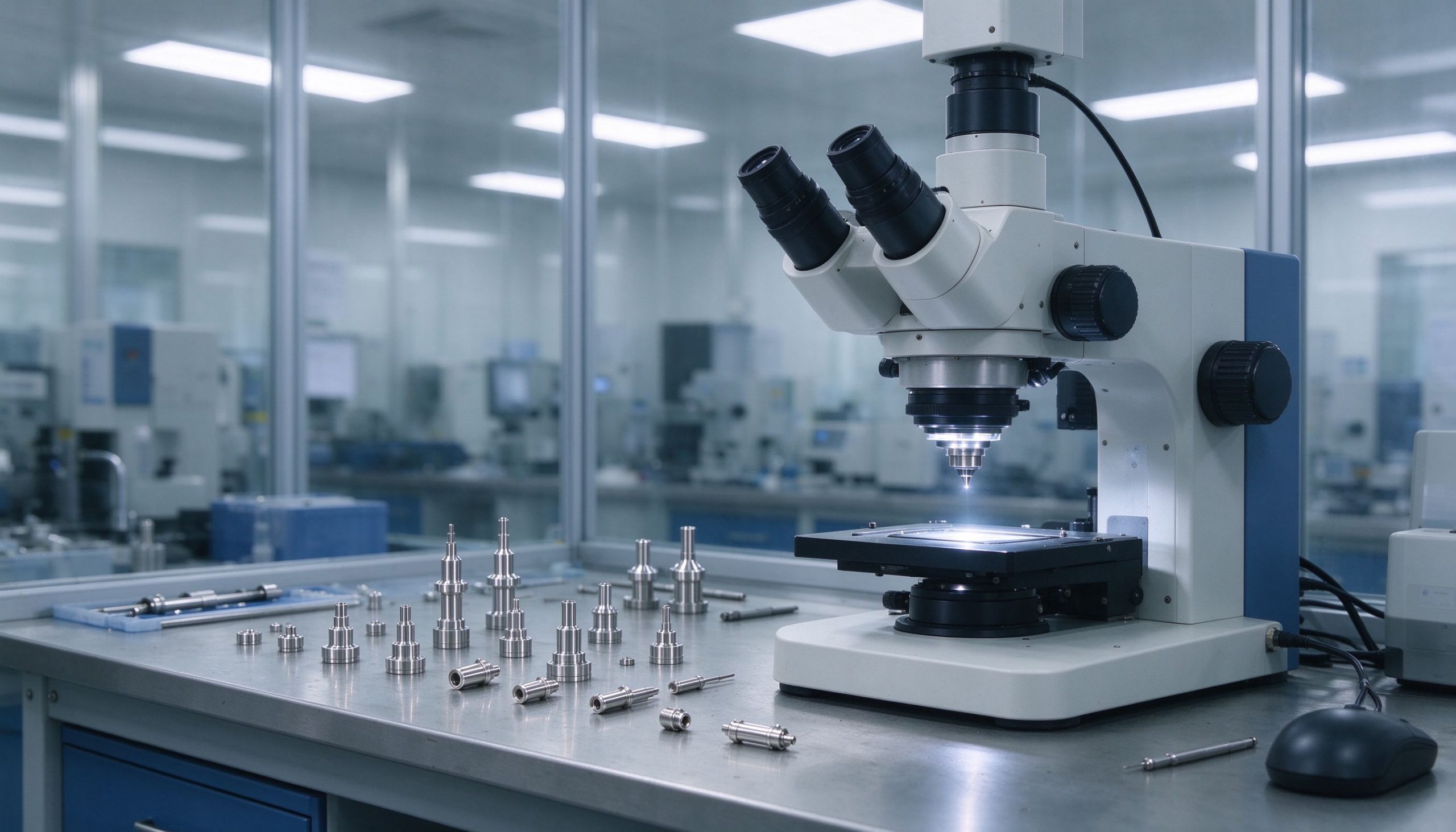
MediPrec GmbH is a German medical device OEM based in Munich, designing insulin delivery and monitoring hardware for European clinics. When their existing machine shop missed three tolerance reviews in a row, their procurement team started looking for a partner who could own medical device CNC parts end to end — tight-tolerance stainless components machined to ±0.005 mm. This case study describes how PufferGo took over the program.
Challenge
MediPrec needed 12 stainless steel components machined for a next-generation infusion pump housing — turned luer-lock connectors, sealing plugs and micro-brackets. The requirements on the table:
- Holding ±0.005 mm on sealing diameters with Ra 0.4 surface finish
- Zero fitment issues at assembly, with full first article inspection documentation
- Delivery to a Munich logistics hub within a stable 4-week lead time
- A supplier auditable against ISO 9001, because notified-body audits could not wait on paperwork
Their incumbent shop quoted 8-week samples and refused dimensional reporting beyond a standard inspection sheet. "We needed a factory that treated our tolerance calls as engineering requirements, not as negotiation points," said MediPrec's sourcing manager.
Solution
PufferGo's engineering team ran a DFM review on the 12 drawings within 24 hours of receiving them, flagging two under-specified sealing diameters and a fixturing risk on the micro-bracket. After the revisions were accepted, production moved into our CNC machined parts line in our 12,000 m² Chang'an, Dongguan factory, machining on imported 5-axis and Swiss-type CNC cells from our fleet of 50 machines.
The program operated under our precision CNC manufacturing solutions workflow:
- DFM feedback returned with the quote, not after the order.
- First samples shipped in 9 working days, complete with a dimensional first article inspection report.
- Pilot batch of 500 pieces ran with SPC charts on the three critical sealing diameters.
- Serial production settled into a monthly 10,000-piece rhythm across the 12 part numbers.
Quality documentation followed the ISO 9001 system PufferGo has held since 2013, and the program was structured so MediPrec's notified-body audit trail was assembled automatically, not after the fact.
The two DFM findings mattered more than the first quote. One sealing diameter had been drawn as a straight bore when the mating luer interface required a controlled lead-in; the micro-bracket's long thin walls needed support fixturing to avoid chatter marks that would have failed the Ra 0.4 callout. MediPrec revised both drawings before cutting metal, which is exactly where a 9-working-day sample cycle starts looking fast instead of lucky. The pilot batch of 500 pieces ran with SPC charts on the three critical sealing diameters, and every one of the 12 part numbers passed first article inspection on the first submission.
Results
Twelve months after kickoff:
| Metric | Outcome |
|---|---|
| First article approval | First submission accepted |
| First-pass yield | 99.2% |
| Delivery lead time | 30% shorter than incumbent |
| Emergency shipments in 12 months | 0 |
| Audit findings on quality documentation | 0 |
MediPrec expanded the program from 12 to 19 part numbers in year two and moved two adjacent product lines to PufferGo. The engagement remains covered by 24-hour engineering response from our 200-person factory team, shipping to 50+ export markets as part of our 800+ customer base. The 30% lead-time reduction came without air freight: it came from cutting the DFM and FAI loops out of the critical path, not from cutting corners.
Your tolerance problem, handled
If your drawings live at ±0.005 mm and your current shop treats that as a suggestion, send them to sales@puffergo.com or start on our contact page. More client outcomes are in our case studies library, and our OEM parts supply program covers the adjacent fastener side.