CNC Machining Materials: 6061-T6, 304/316L and Ti-6Al-4V Compared。
Strength, corrosion, machinability, lead time and cost — side by side, so you can sign off a material before the RFQ goes out.
- 5-axis machines
- 50
- Tolerance
- ±0.005 mm
- Outgoing yield
- 99.2%
- Quote response
- 24 h
Five numbers decide most CNC machining materials questions
When buyers in North America and Europe compare CNC machining materials, the argument almost always runs on the same five numbers: tensile strength, corrosion resistance, machinability, typical lead time and part cost. Everything else — finishes, certificates, inspection — follows from those.
This page puts aluminum 6061-T6, stainless steel 304/316L and titanium Ti-6Al-4V on one line each, tells you where each one earns its price, and ends with a single sentence you can forward to your engineering team. It is written for the person who has a drawing on screen and has to tell the shop which material to quote.
If you only read one row
Corrosion resistance is the row that decides between 304 and 316L — and the row buyers get wrong most often.
If the part is cosmetic
6061-T6 takes anodizing, bead blasting and brushing better than either stainless grade, at a lower blank cost.
If the part is regulated
316L and Ti-6Al-4V arrive with heat-number traceability and can be quoted against your material spec.
Pick the material, then the part page
Each card links to the product page with sizes, tolerances, finishes and typical applications for that grade.
6061-T6
The default choice when the part has to be light, stiff and affordable. Machines fast, holds tolerance easily, takes anodizing well.
- Tensile strength
- 310 MPa
- Density
- 2.70 g/cm³
- Corrosion
- Good, anodize for washdown
- Machinability
- Excellent
304 / 316L
The workhorse for anything that gets cleaned, sterilized or seen by a customer. 316L adds molybdenum for chlorides and marine air.
- Tensile strength
- 505 / 485 MPa
- Density
- 8.00 g/cm³
- Corrosion
- Good / excellent
- Machinability
- Moderate, work-hardens
Ti-6Al-4V (Grade 5)
Buy it for strength-to-weight or for body contact — not for surface finish. Slow to cut, hard on tooling, and worth it when the design depends on it.
- Tensile strength
- 950 MPa
- Density
- 4.43 g/cm³
- Corrosion
- Excellent, biocompatible
- Machinability
- Difficult
Strength, corrosion, machinability, lead time, cost
Typical values for annealed bar and plate stock. Your drawing’s wall thickness, tolerance and finish will move the last two rows — the first three stay put.
| Criterion | ALUMINUM 6061-T6 | STAINLESS 304 / 316L | TITANIUM Ti-6Al-4V |
|---|---|---|---|
| Tensile strength | 310 MPa yield 276 MPa |
505 MPa (304) 485 MPa (316L) |
950 MPa yield 880 MPa |
| Corrosion resistance | Good indoors and in fresh water. Anodize or chromate where the part sees washdown, salt or chloride cleaners. | 304 handles food, fresh water and normal atmosphere. 316L adds molybdenum for chlorides, brine, marine air and aggressive cleaning agents. | Excellent in chlorides, seawater and body fluids. No coating required, and it does not pit in sterilization cycles. |
| Machinability | Excellent. 500–1,000 SFM in carbide, long tool life, low cutting force — the baseline other materials are priced against. | Moderate. 150–200 SFM; work-hardens if the tool rubs, so light cuts and constant feed. 316L is slightly gummier than 304. | Difficult. 100–150 SFM, heat stays in the cut, tool wear is the cost driver. Thin walls and deep pockets need 5-axis and patience. |
| Typical lead time 50–500 pcs, material in stock |
5–7 working days | 8–12 working days | 12–18 working days |
| Relative part cost same geometry, same quantity |
1.0× | 1.8–2.5× 316L at the top of the range |
4–6× |
Indices compare finished part price at equal geometry and quantity, before finishing and freight. Lead times assume material in stock and exclude anodizing, passivation or electropolishing. Send a drawing and we will confirm both against your tolerance and surface callout.
Three industries, three different answers
The same drawing can be 6061-T6 in one plant and 316L in the next. What changes is not the geometry — it is what the part touches.
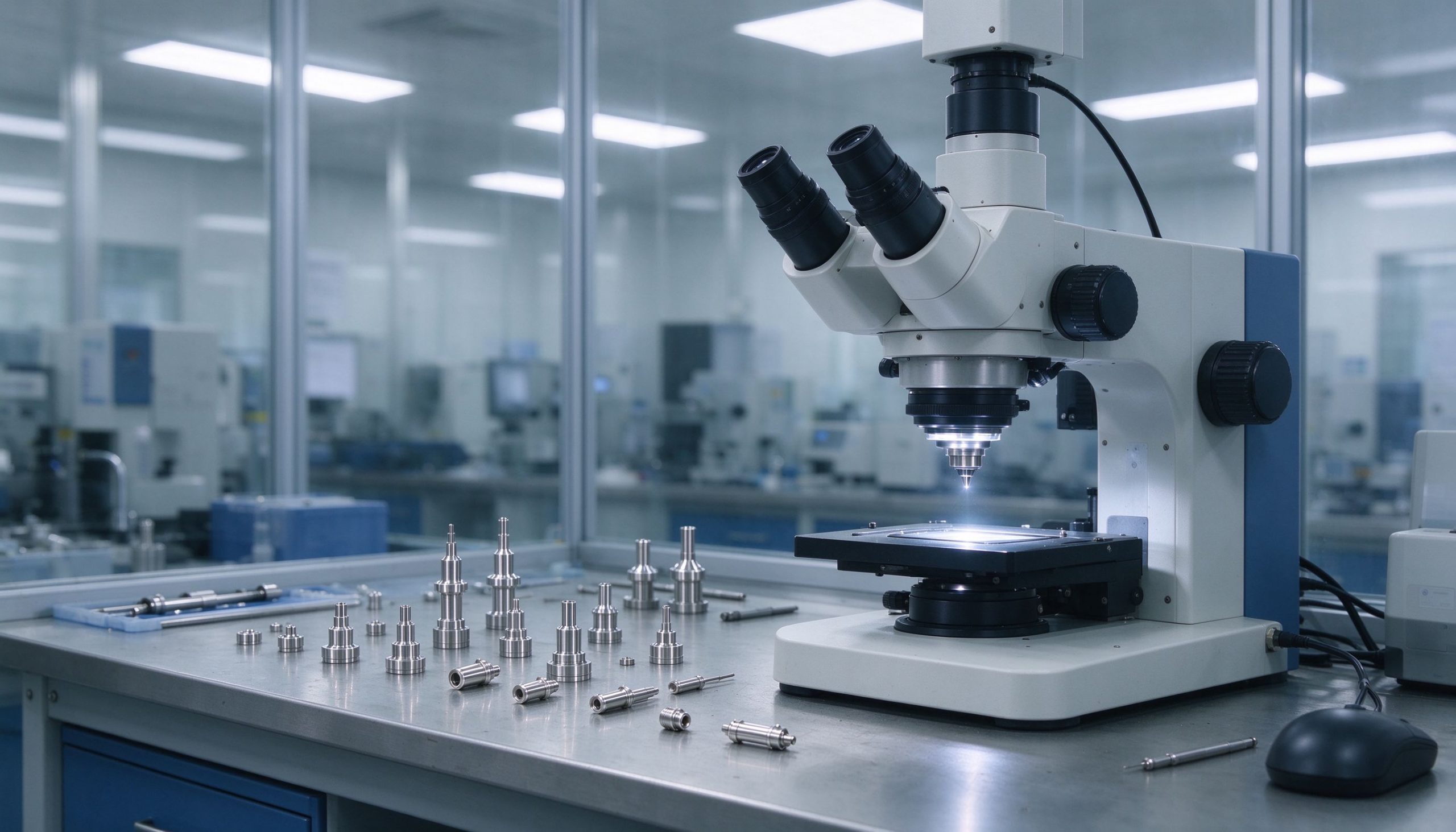
Instrument bodies, handpiece shafts and implant housings
316L covers instrument bodies, trays and housings that go through repeated autoclave cycles. Ti-6Al-4V takes over where the part carries load, sits in the body, or has to stay compatible with MRI. 6061-T6 stays on the equipment side — fixtures, housings, non-sterile hardware.
- Typical grade
- 316L, Ti-6Al-4V
- Finish
- Passivation, Ra ≤ 0.8 µm
- Documents
- Heat-number MTR with each lot
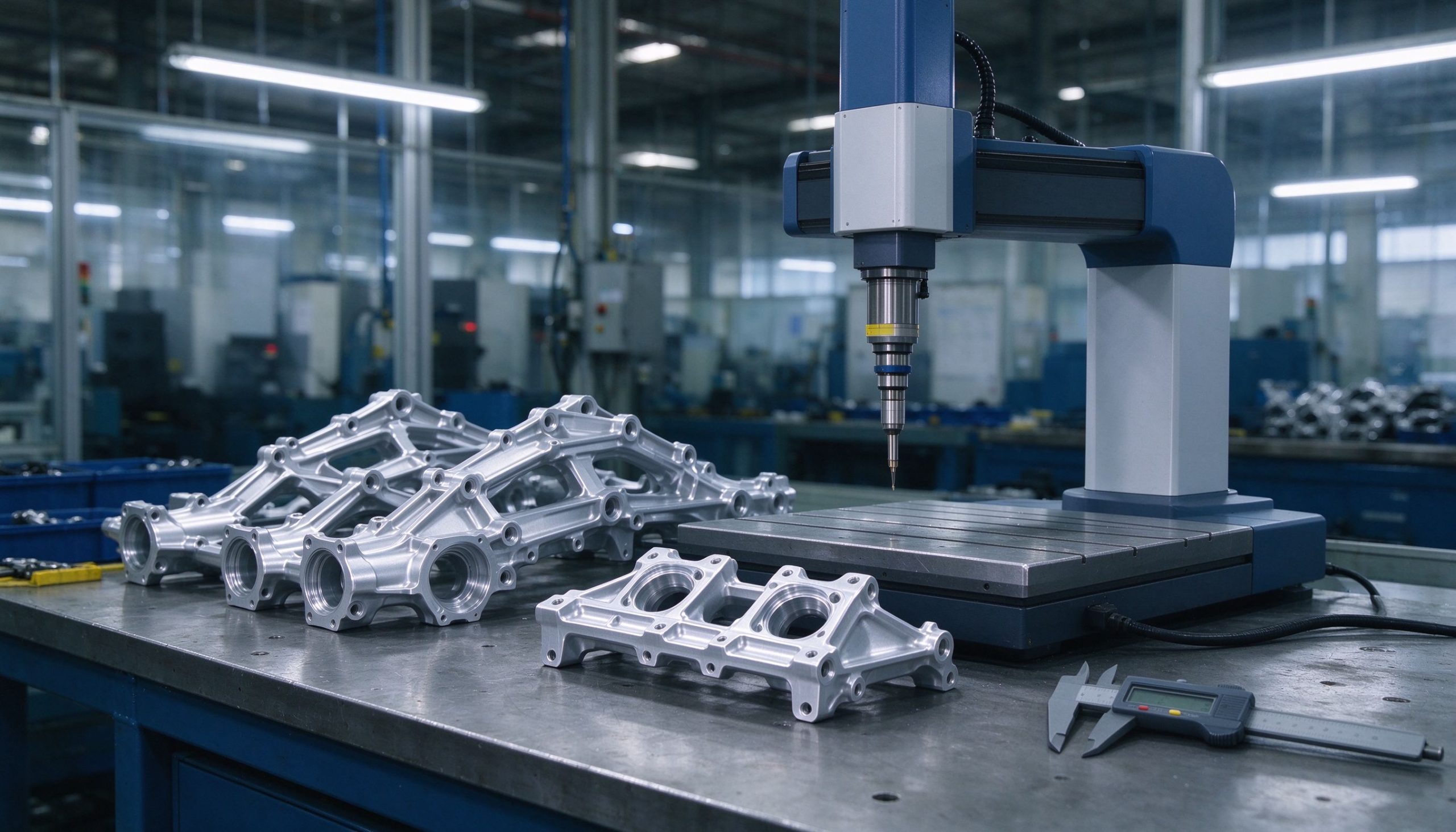
Brackets, housings and sensor bodies
6061-T6 is the default for structural brackets, motor housings and battery-pack hardware, where removing 60% of the weight of a steel part changes the range of the vehicle. 304 goes where road salt and exhaust heat are in play; Ti-6Al-4V is reserved for motorsport and high-temperature joints.
- Typical grade
- 6061-T6, some 304
- Process control
- IATF 16949
- Finish
- Anodize, chromate, bead blast
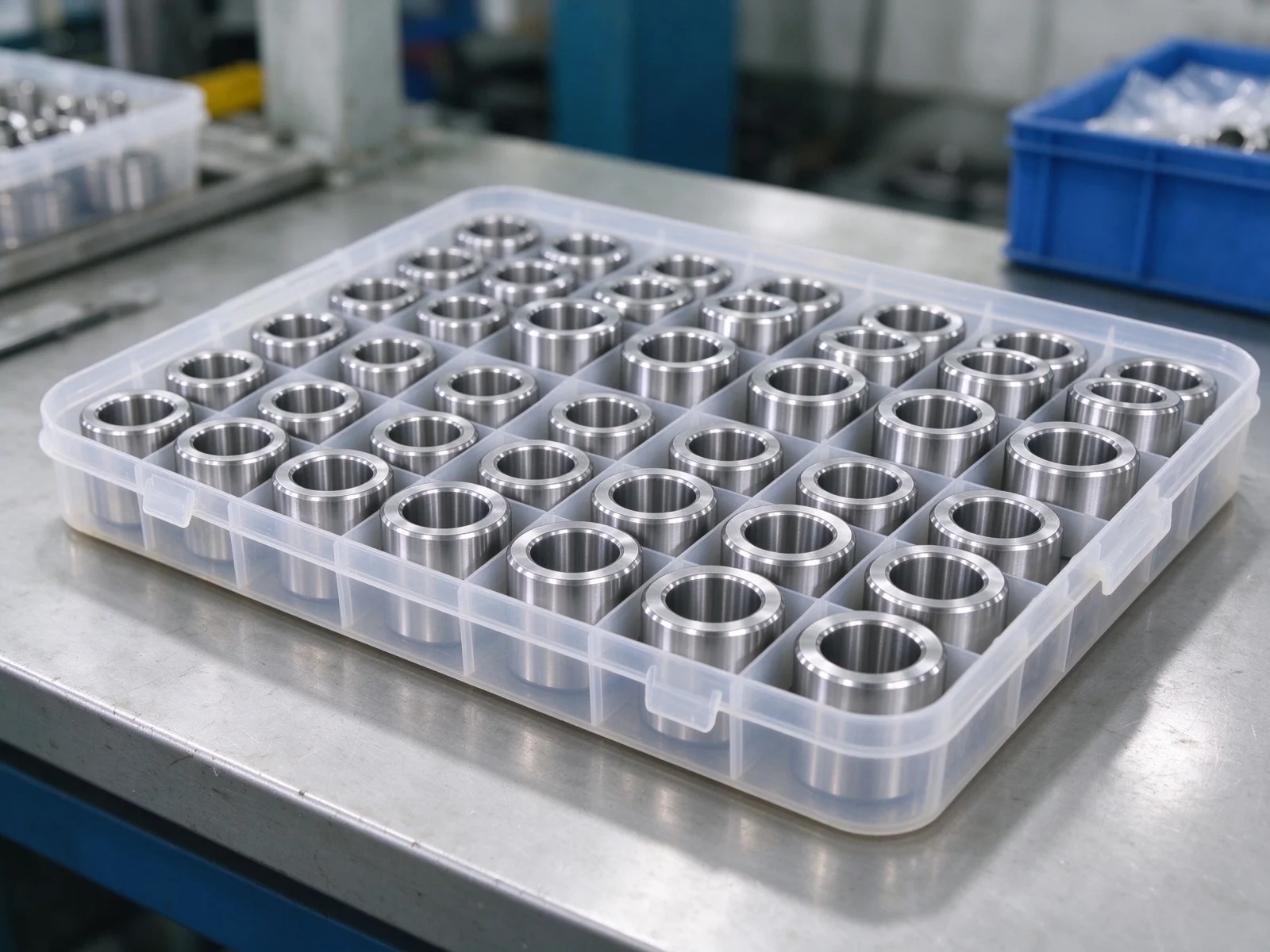
Hygienic fittings, valve bodies and filler parts
304 works for dry product contact and clean-in-place with neutral detergents. Move to 316L as soon as the washdown water carries chloride, or the product is brine, sauce or dairy with a salty clean-down cycle. Both are machined to Ra ≤ 0.8 µm with radiused internal corners so nothing traps product.
- Typical grade
- 304 or 316L
- Surface
- Ra ≤ 0.8 µm, electropolish on request
- Documents
- EN 10204 3.1 certificates
If the part only has to be light, stiff and affordable, it is 6061-T6; if it touches a patient, a washdown or a chloride, it is 316L; and Ti-6Al-4V is worth four to six times the price only when weight or biocompatibility is the constraint that decides the design.
Three checks, every batch
Choosing the grade is half the decision. The other half is being able to show, on paper, that the parts you received are the parts that were specified.
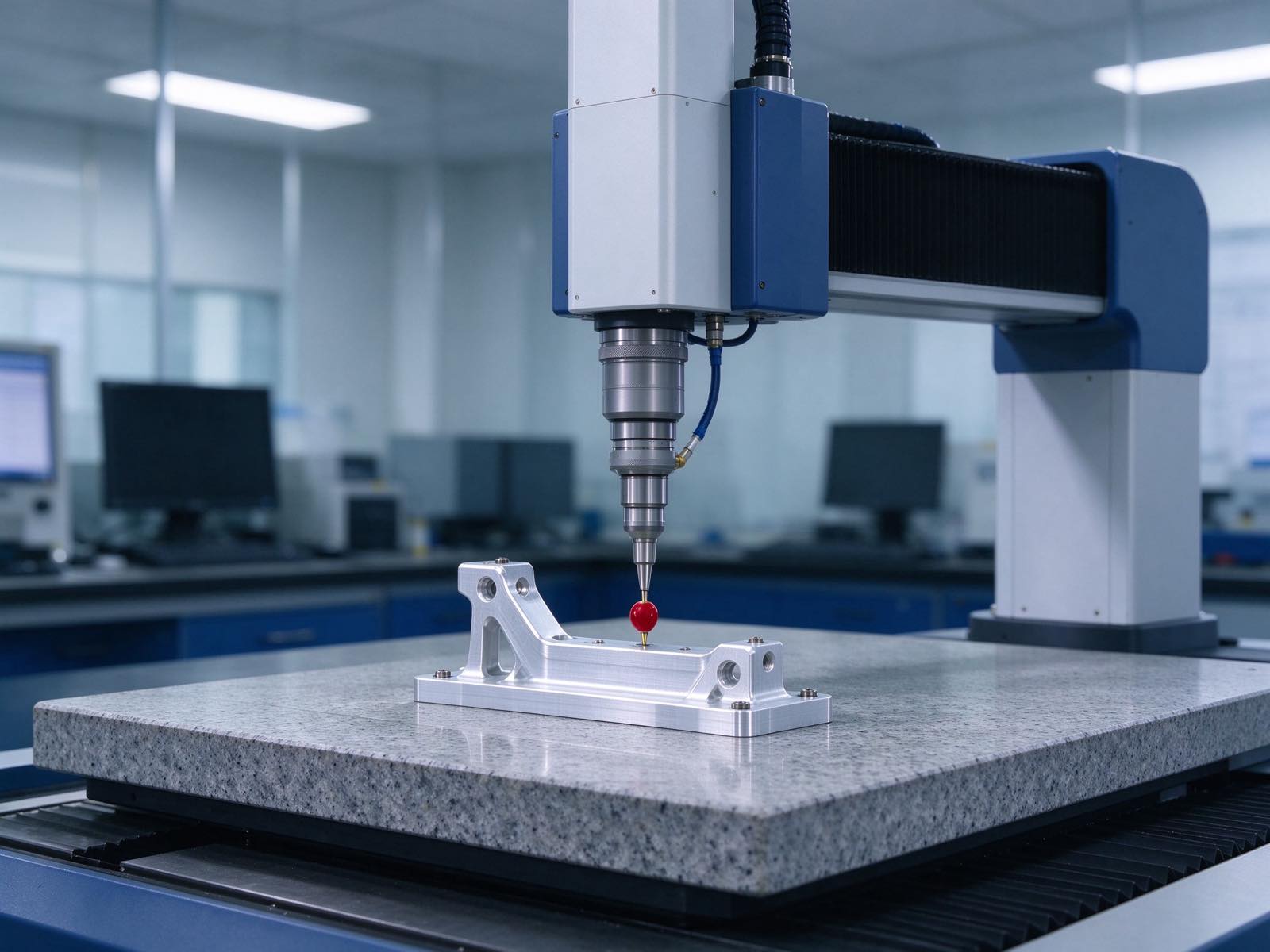
Coordinate measuring machine
Bridge CMM on a granite table for bores, profiles and true position. Held to ±0.005 mm, with first-article reports and in-process sampling on every run.
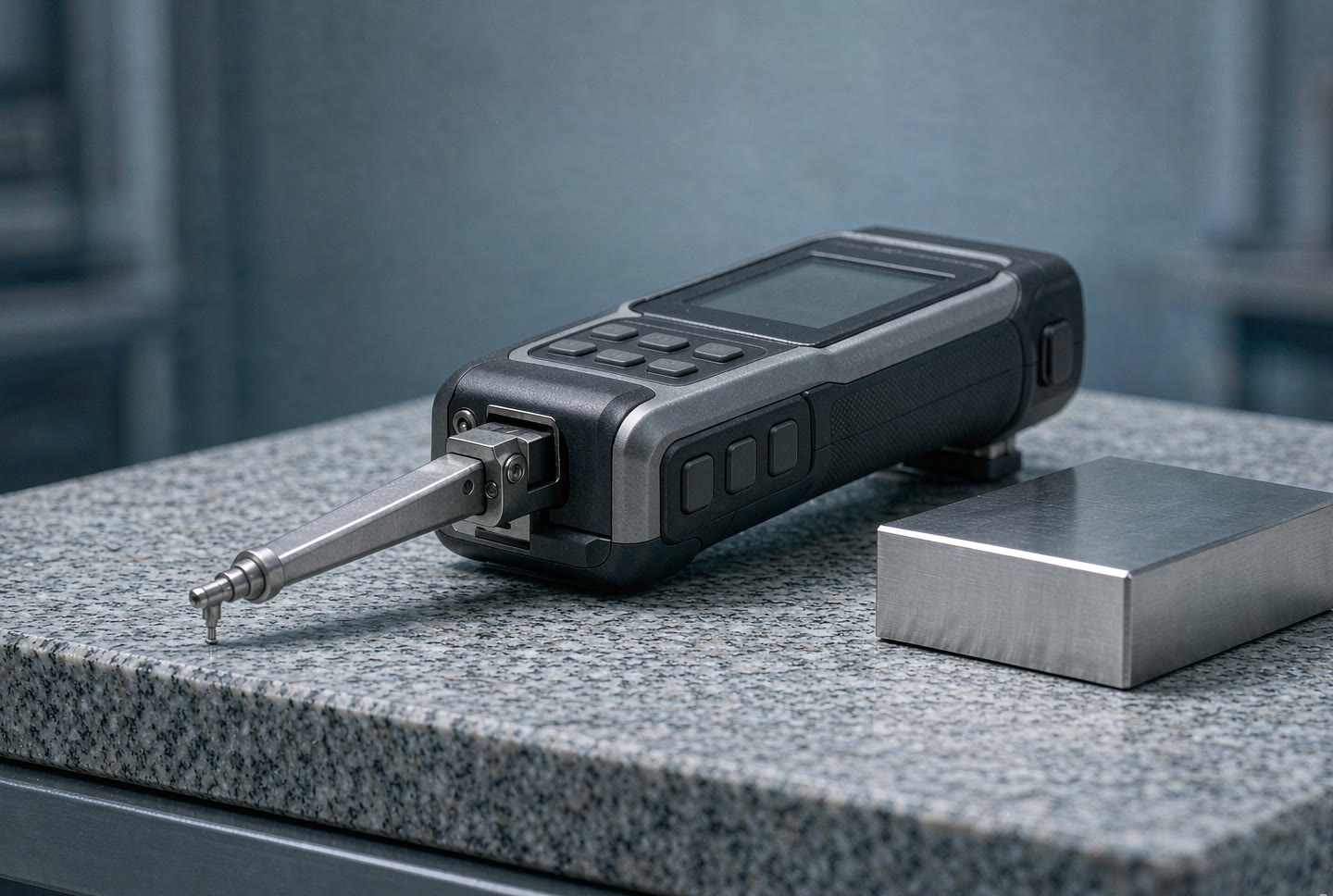
Roughness tester
Stylus profilometer checking Ra against the drawing callout — typically 0.4–3.2 µm. This is the number that decides whether a stainless part passes a hygienic audit.
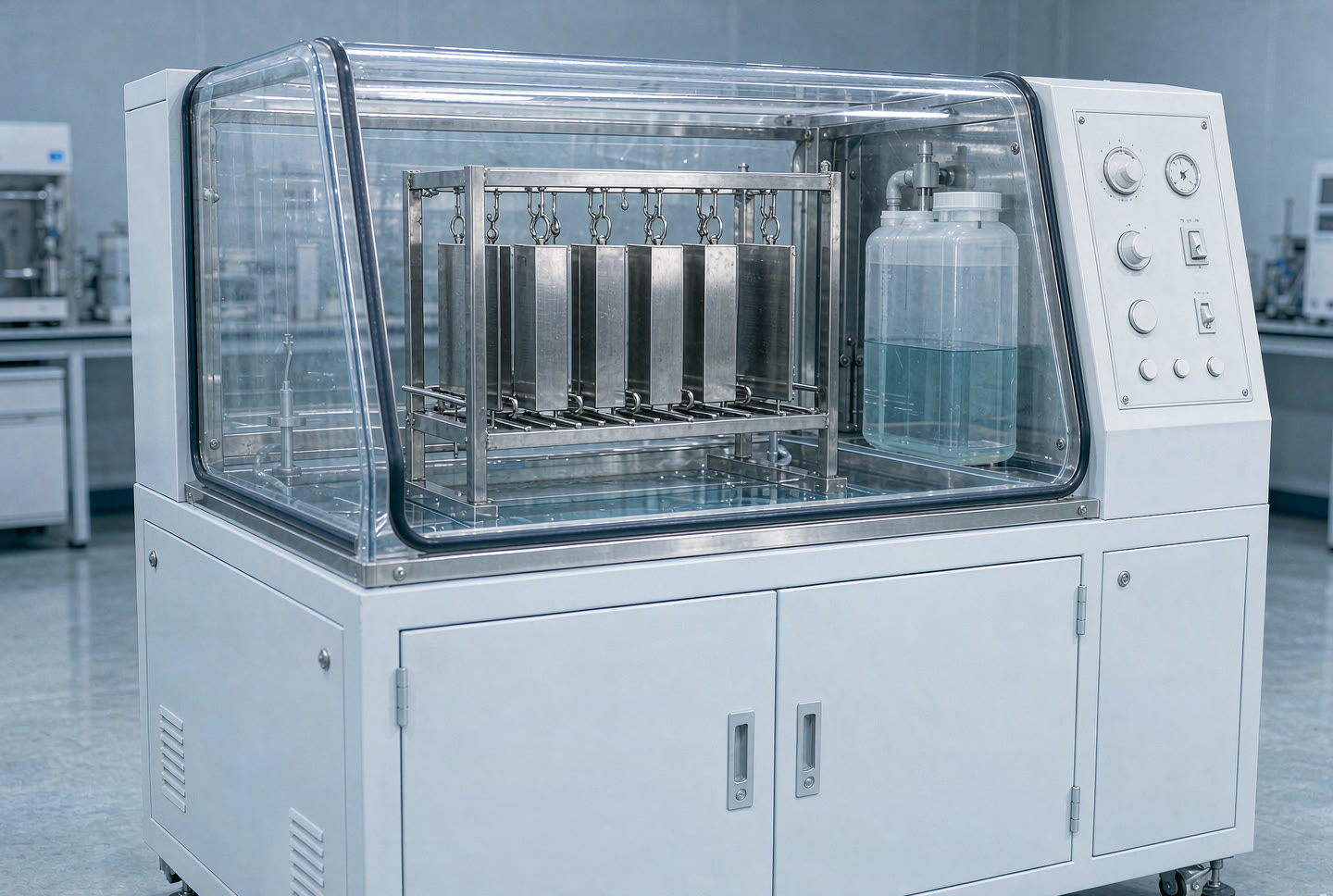
Salt spray test
Neutral salt spray to ASTM B117 when the drawing calls for it: 96 h on anodized aluminum, up to 480 h on 316L and Ti-6Al-4V.
Material certificates, heat-number traceability and inspection reports ship with the lot — ask for them on the PO.
Four things to settle before the RFQ
Which of the three is cheapest for CNC machining?
6061-T6, in almost every case. The blank costs less, it cuts at three to five times the speed of stainless, and tool life is longer — so the saving shows up twice, once in material and once in machine time. The gap widens on parts with large pockets or long cycles, and narrows on small turned parts where handling dominates.
Can you hold Ra 0.8 µm in 316L?
Yes. It needs sharp carbide, a lighter finishing pass and rigid fixturing so the tool does not rub and work-harden the surface, then passivation to restore the oxide layer. Below Ra 0.4 µm — or where a hygienic audit wants a mirror finish — we would quote electropolishing instead of chasing the number with the tool.
Is Ti-6Al-4V worth four to six times the price of 316L?
Only if you can name the constraint it solves: weight at the end of a moving arm, direct body contact, MRI compatibility, or service above 300 °C. If the honest answer is that titanium is the better metal, 316L will usually do the job at a third of the price — and machine three times faster.
What documentation arrives with a lot?
A material certificate to EN 10204 3.1 with the heat number, dimensional and roughness reports for the sampled parts, and the salt spray result where the drawing specifies one. First-article inspection reports are available on request, and our ISO 9001 and IATF 16949 certificates can be sent with the quotation.
Send the drawing. We will tell you which material we would machine it in — and quote it in 24 hours.
STP, IGES, X_T, DXF or a dimensioned PDF. If the material is still open, say so and the quote will come back with the grade we recommend and why.