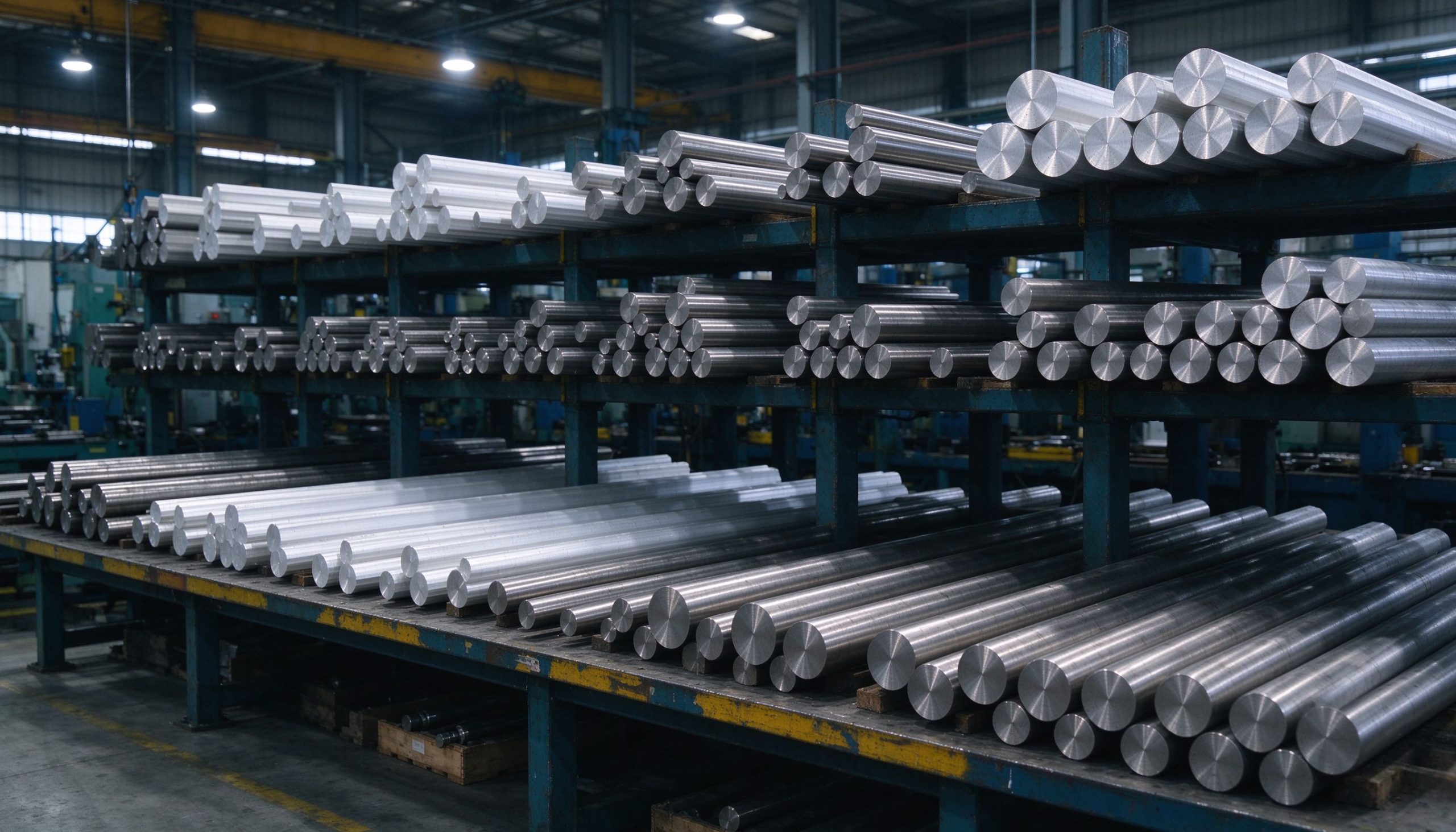
Choosing material is the first decision that locks in cost, tolerance, lead time and surface finish for your CNC part. Yet many engineers pick a stock alloy by habit and only discover the machining trade-offs later. This CNC machining materials guide covers the three alloys that dominate precision export work — aluminum, stainless steel and titanium — so you can match material to application with confidence.
Aluminum: the default for fast, light, cost-sensitive parts
Aluminum alloys (6061 and 7075 are the most common) machine faster than any other structural metal, produce excellent chip control and anodize beautifully.
- 6061 — general purpose, good corrosion resistance, easy to anodize, weldable. The default for enclosures, brackets and fixturing.
- 7075 — higher strength, closer to steel, but harder to anodize and more expensive. Used where weight-to-strength matters.
Pros: fastest machining = lowest per-part cost; excellent for tight features because the material cuts predictably; lightweight. Cons: soft enough to scratch, so fixturing must be gentle; not ideal for high-wear or high-temperature use.
Aluminum is why most prototype and low-volume enclosures ship in 6061. It is also forgiving when you push tight tolerances — read how that interacts in 5-axis CNC machining tolerances.
Stainless steel: corrosion resistance and strength
Stainless (304 and 316L) is the workhorse for anything that sees moisture, medical environments or demanding clean conditions. It machines more slowly than aluminum and work-hardens, which demands sharp tools and conservative feeds.
- 304 — general corrosion resistance, good formability, common for fittings and food/medical hardware.
- 316L — higher corrosion resistance with low carbon for weldability; the standard for medical and marine exposure.
Pros: excellent corrosion and heat resistance, strong, takes passivation well. Cons: slower cycle times and higher tool wear; work-hardening means cut too light and the material pushes back.
After machining, stainless parts routinely go through passivation to remove free iron and restore corrosion resistance — part of the CNC surface finish options we cover separately.
Titanium: strength-to-weight in demanding environments
Titanium (grade 5 / Ti-6Al-4V) offers the best strength-to-weight ratio of the three and outstanding biocompatibility — which is exactly why medical and aerospace buyers specify it.
Pros: extraordinary strength-to-weight, excellent corrosion and biocompatibility. Cons: poor thermal conductivity means heat stays in the tool; it is the slowest and most expensive to machine, requiring rigid setups and controlled speeds. Thin walls are especially unforgiving.
Titanium rewards good process control but punishes a shop that treats it like steel.
How the three compare at a glance
| Factor | Aluminum 6061 | Stainless 316L | Titanium Gr.5 |
|---|---|---|---|
| Machining speed | Fast | Medium | Slow |
| Relative cost | Low | Medium | High |
| Corrosion resistance | Good | Excellent | Excellent |
| Strength-to-weight | Moderate | Moderate | Excellent |
| Best for | Enclosures, brackets | Wet/medical hardware | Implants, aerospace parts |
Material choice drives everything downstream
Pick the cheapest alloy that meets your functional requirements — not the one you always use. Over-specifying titanium where 6061 works quietly doubles your per-part cost and lead time; under-specifying aluminum where corrosion resistance is required creates field-failure risk.
Every alloy we ship comes from certified, traceable stock with mill certificates, and our 50 imported 5-axis machines are tuned per material for rigidity, coolant and tooling strategy. With 8 production lines, a 99.2% first-pass yield and annual capacity of 5 million parts, PufferGo produces precision CNC machined parts in all three alloys for 800+ customers across 50+ countries. A decade of focus, only precision parts done right.
Unsure which alloy meets your strength, corrosion and budget targets? Contact our engineers at sales@puffergo.com / +86 138 1234 5678 — send the drawing and we will recommend the material that optimizes tolerance, finish and cost together.
0 Comments