Two questions come up on almost every RFQ: do I need a 5-axis machine, or is 3-axis enough? The answer decides your price, your lead time and — most importantly — whether your critical features actually hold tolerance in production. This guide compares 5-axis vs 3-axis CNC machining on the factors that matter to precision buyers, so you can choose the right process instead of paying for capability you do not need.
The core difference: axes and setups
A 3-axis machine moves the tool along X, Y and Z. The part sits still, and you machine one side at a time. To reach five or six faces, the operator must stop, reclamp, and re-indicate the part — a new setup for each orientation.
A 5-axis machine adds two rotational axes (typically A and C, tilting the spindle or the table). The part can pivot while the tool cuts, so features on multiple faces — angled holes, tapered walls, contoured surfaces — are machined in a single clamping.
That single-setup advantage is the whole story. Everything else — price, lead time, tolerance — flows from it.
Tolerance: where the difference shows
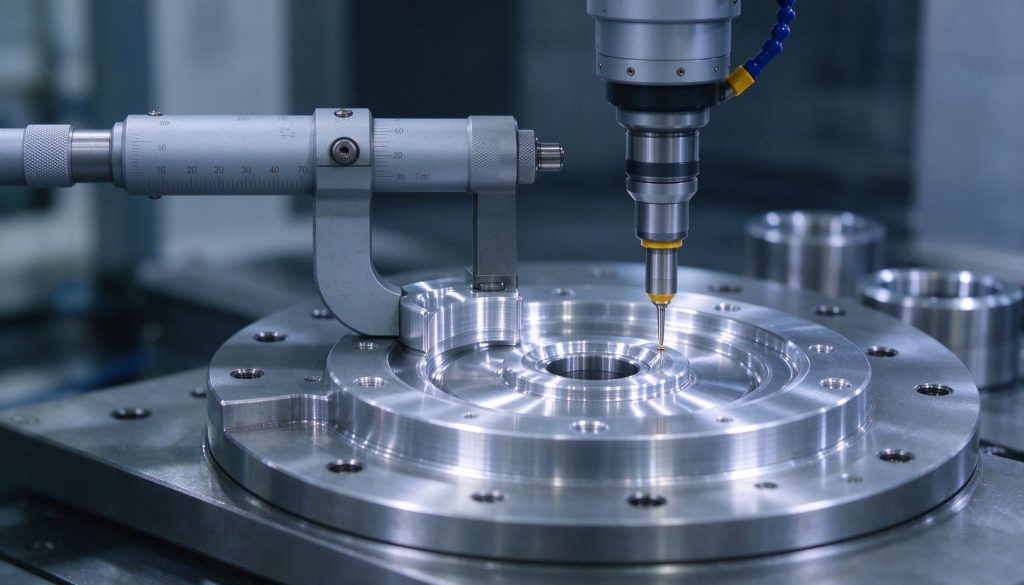
Every reclamp introduces a small positioning error that stacks across features. A part needing three setups might only hold ±0.03 mm overall, even though the machine itself positions far better. Machine it once on a 5-axis center and the same geometry can reach ±0.005–0.01 mm between those features, because the datum reference never changes.
We break this down numerically in what tolerances 5-axis machining really holds. The takeaway: 5-axis is not about a tighter spindle spec — it is about removing fixturing error.
When 3-axis wins
Do not assume 5-axis is always better. A 3-axis vertical mill is the right and cheaper choice when:
- The part is a simple block, plate or bracket machined primarily from one side.
- Volumes are high and geometry is straightforward — 3-axis runs are fast and well-understood.
- Tolerances are general (±0.02–0.1 mm) and do not depend on multi-face alignment.
- Budget is constrained and a good 3-axis shop can hit your drawing with two setups.
3-axis machines are also faster to set up and operate, which lowers per-part cost on simpler work. For a huge share of CNC machined components, 3-axis is not a compromise — it is the optimum.
When 5-axis becomes necessary
Move to 5-axis when:
- The part needs multi-face features in one clamping — impellers, blades, housings, manifolds, optical brackets.
- You have complex 3D contours or angled holes that a ball-nose tool cannot reach efficiently on 3-axis.
- Datums must relate across faces at tight tolerance.
- Geometry would otherwise need expensive custom fixturing to hold on a 3-axis mill.
Long, thin tools that would chatter on 3-axis can run shorter and more rigidly on 5-axis by tilting the spindle — another quiet accuracy and surface-finish win.
Cost and lead time
5-axis machines cost more to run, so setup and machine-hour rates are higher. But that premium is often offset:
- Fewer setups = less labor and less chance of a fixturing mistake.
- One clamping = fewer operations, which shortens lead time on complex parts.
- Less secondary machining on multi-face geometry.
On simple parts, 3-axis remains cheaper. On complex, tight-tolerance parts, 5-axis frequently comes back lower total cost once rework and inspection are counted.
Surface finish and tool life as a hidden factor
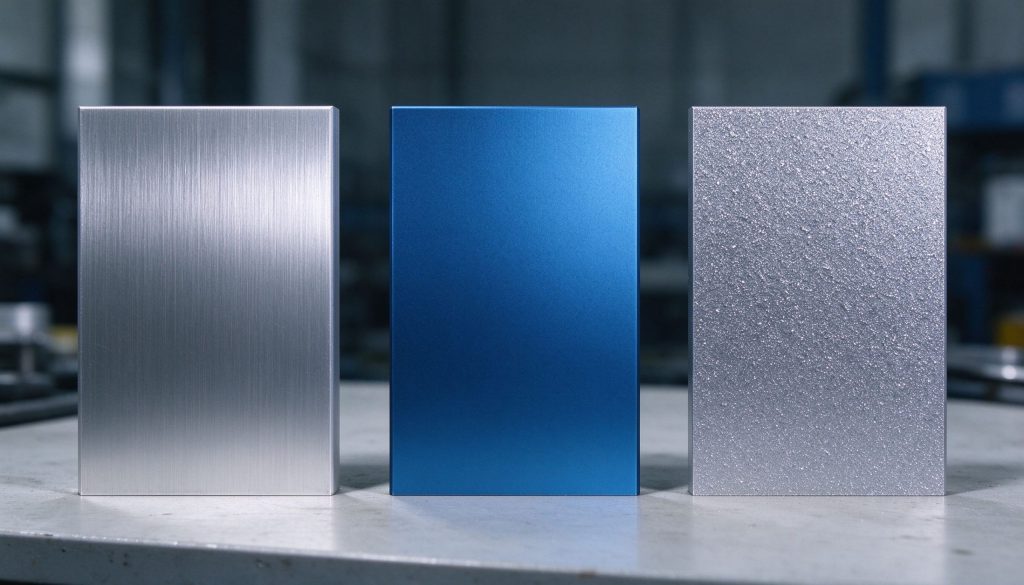
There is another difference buyers overlook. On a 3-axis mill, reaching an angled or deep feature often demands a long, thin end mill that chatters and leaves a poor surface. On a 5-axis center, the spindle tilts to approach the feature, so a shorter, stiffer tool can do the job — cutting cleaner surfaces, lasting longer and reducing hand-finishing. For visible or seal surfaces, that is a real quality and cost advantage, and it pairs naturally with the CNC surface finish options specified after machining.
Common buyer mistakes
- Defaulting to 5-axis on everything. You pay a premium for capability your simple bracket does not need.
- Defaulting to 3-axis on complex parts. You pay for custom fixturing, multiple setups and rework that a single 5-axis clamping would have avoided.
- Asking for a quote without disclosing production volume. The right process changes between a 20-piece prototype and a 20,000-piece run — tell the supplier both.
How to choose for your part
- Count the faces and angled features. If one setup covers the part, start with 3-axis.
- Look at the datum frame. If critical features relate across faces tightly, lean 5-axis.
- Match process to production intent. A part designed for a single 5-axis setup scales better into volume — see prototype to production without rework.
- Ask your supplier to recommend the process on the drawing, not just quote the machine they happen to have free.
PufferGo runs both, and recommends honestly
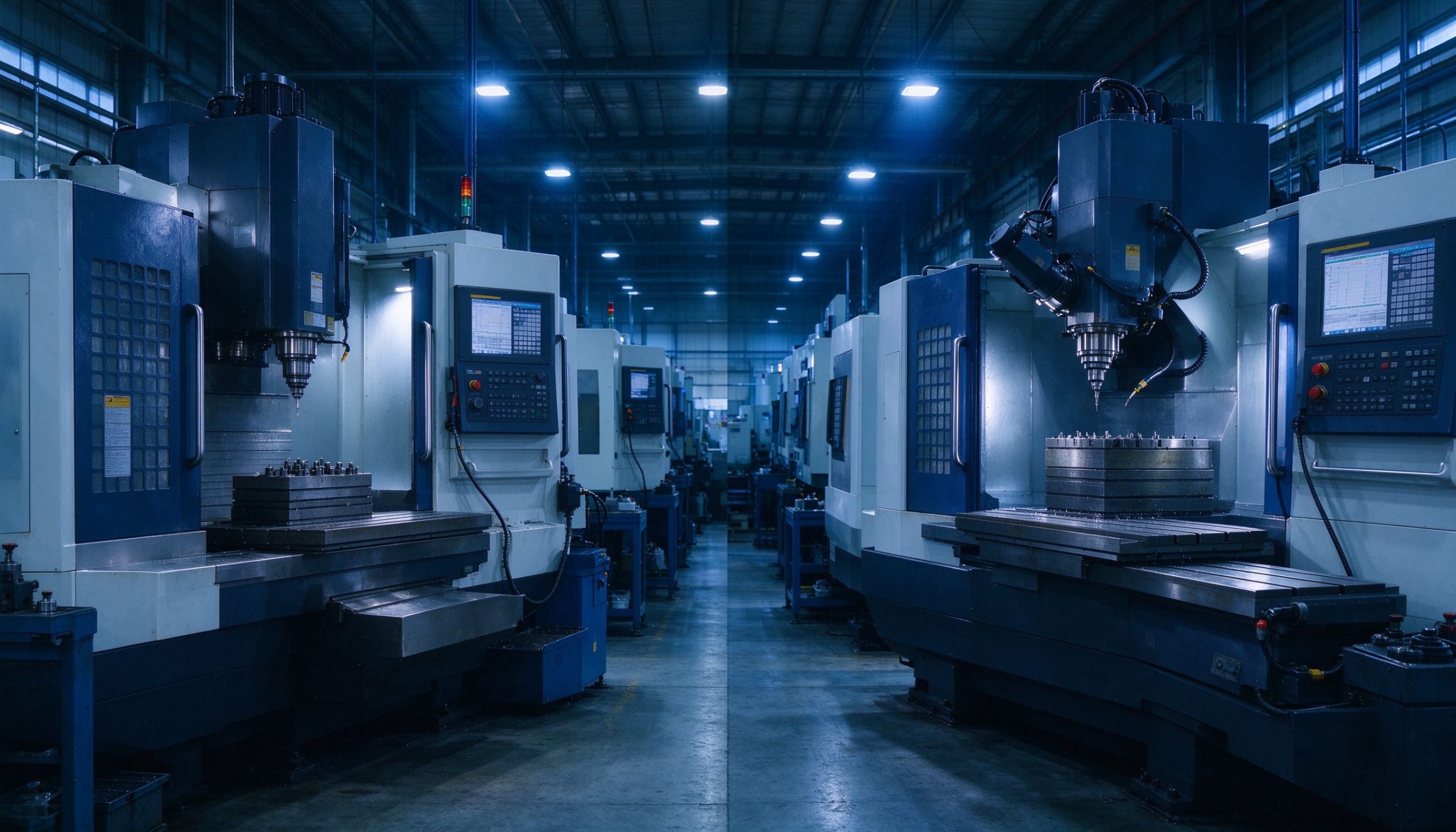
We operate 50 imported 5-axis CNC machines across 8 production lines in our 12,000 m² Dongguan facility — but we also run efficient 3-axis production for the parts that genuinely belong there. On our 5-axis CNC milling services and our broader precision CNC machined parts program, we match the process to the geometry. With a 99.2% first-pass yield across 800+ customers in 50+ export markets, we hold ±0.005 mm where it matters. A decade of focus, only precision parts done right.
Unsure whether your part needs 5-axis or 3-axis? Send the drawing to sales@puffergo.com / +86 138 1234 5678 — our engineers will recommend the most cost-effective process, not the most expensive machine on the floor.
0 Comments