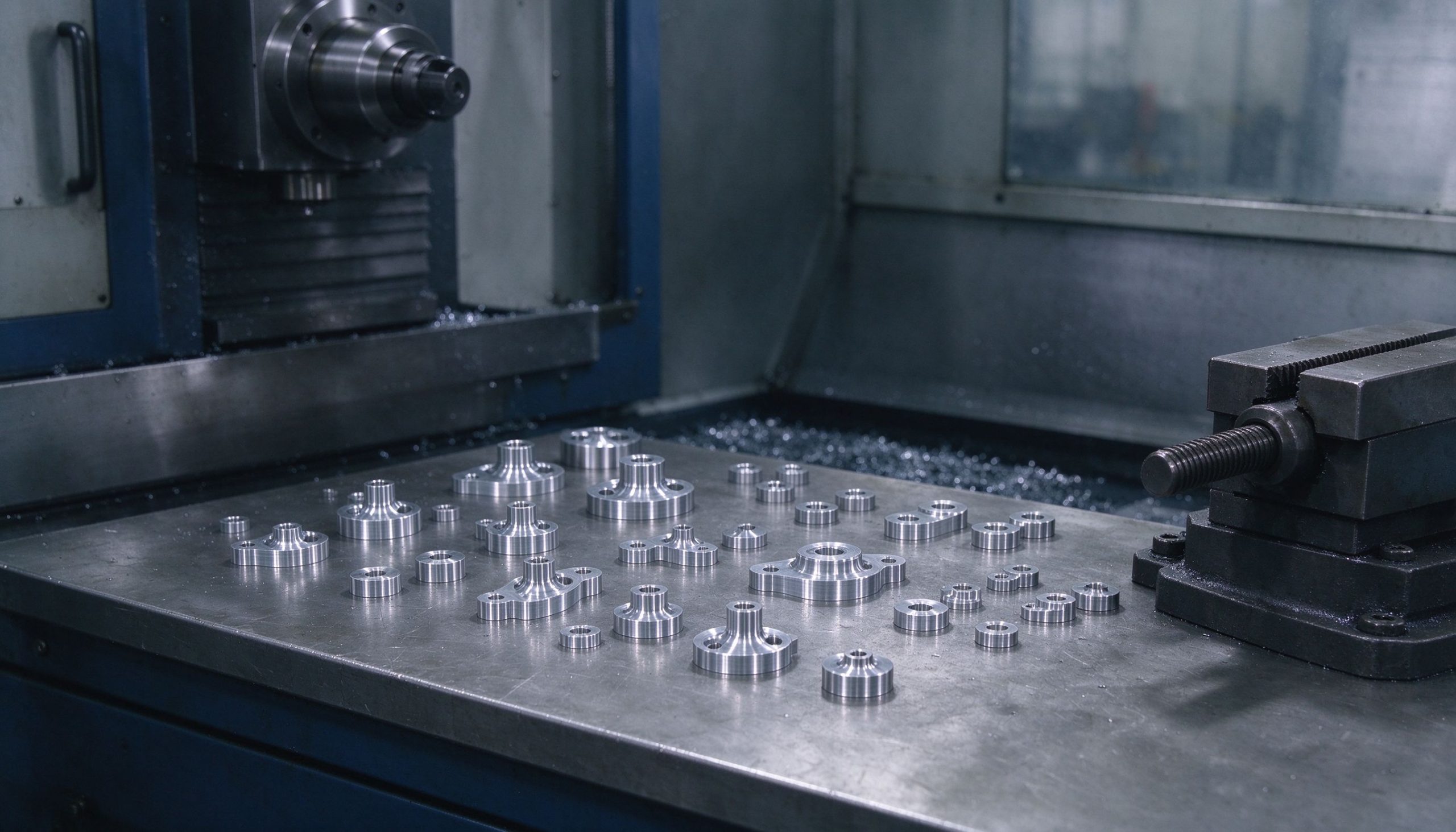
The most expensive moment in CNC manufacturing is not the first prototype — it is the moment a design moves from prototype to production and suddenly nothing matches. A part that machined beautifully in a one-off shop drifts in a 5,000-piece run because the fixture, the tooling strategy and the inspection plan were never meant for repeatability.
Good CNC prototyping is not just about getting a fast sample. It is about choosing a process that scales. This guide explains how to move from prototype to production without rework.
Why prototypes often fail to scale
Prototype shops optimize for speed: one-off setups, hand-tweaked programs, spot-check measurement. That workflow produces great first parts — but it does not document the process parameters needed to repeat them. When volume rises, nobody knows which setup held the tolerance, and the rework begins.
The fix is to treat the prototype as a production-representative run from day one: same machine strategy, same datum frame, same fixturing logic that production will use.
Four rules for a prototype that scales
1. Machine the prototype on the same process you will production-machine. If production will use a 5-axis single setup, prototype on 5-axis too. Tolerances hold differently — see 5-axis CNC machining tolerances for why the datum-to-datum accuracy changes.
2. Lock a datum reference frame early. The datums you define on the first drawing should survive into production. Changing datums mid-project forces re-programming and re-inspection.
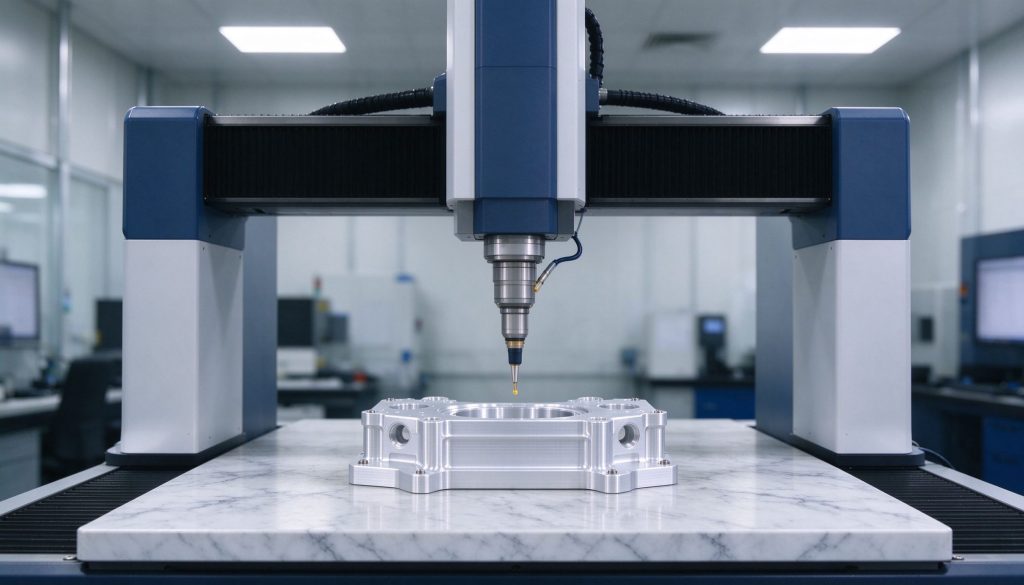
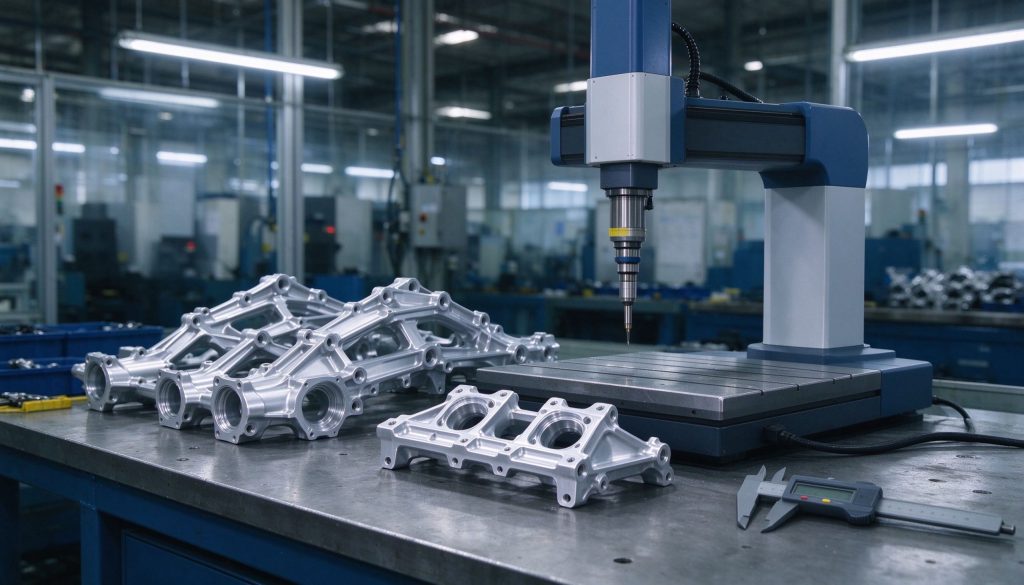
3. Get a First Article Inspection (FAI) report on the prototype. Dimensional data on the very first parts becomes your production baseline. Without it, you are flying blind at volume.
4. Keep the same supplier. Switching shops between prototype and production is the single biggest source of tolerance drift. One factory that does both removes the transfer error.
Scaling means process control, not just more machines
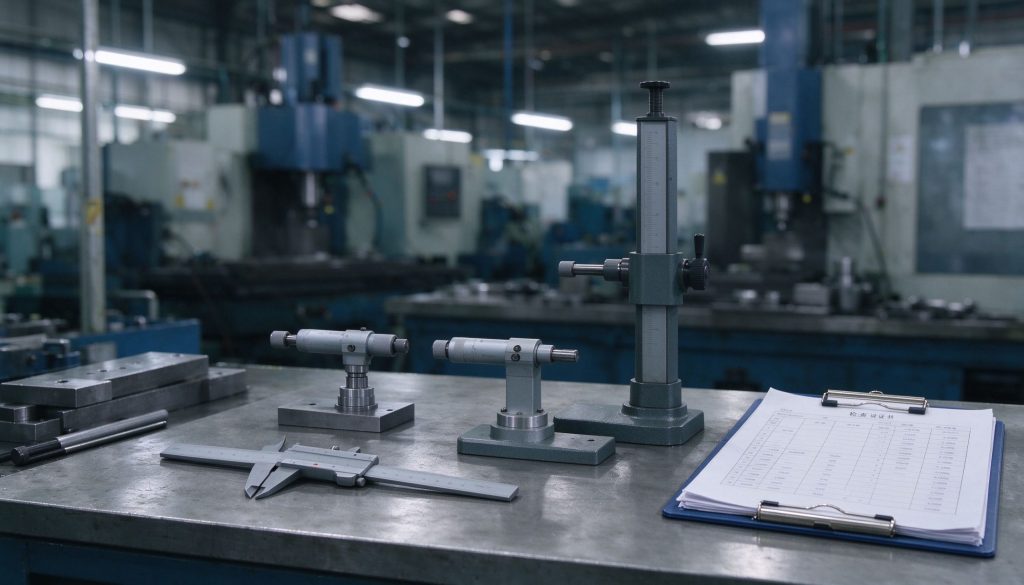
Production repeatability comes from controlled variables: thermal stabilization, tool-wear management, in-process checks and a sampling inspection plan. A prototype is measured on nearly every feature; at volume you cannot do that economically, so you need a documented sampling plan tied to a CMM baseline. That plan is only trustworthy if the process behind it never changed between sample and run.
There is also a cost dimension. At low volume, one-off setup time dominates the per-part price. As volume grows, amortizing a stable, repeatable program across thousands of parts drops unit cost sharply — but only if the program itself was production-ready from the start. A process engineered for speed at the prototype stage hits diminishing returns and rework cost at scale.
At PufferGo, our 8 production lines and 50 imported 5-axis machines run under one ISO 9001- and IATF 16949-controlled system, so the same rigor that approved your prototype governs the million-piece run.
As volumes grow, your quality system expectations also rise — especially for automotive buyers, where ISO 9001 vs IATF 16949 determines whether your supplier is even audit-eligible.
Real scaling: when a prototype became a supply program
You can see this in action in the Autopartes Monterrey automotive case study, where a machined prototype matured into a standing multi-part supply program without a single tolerance re-baseline. For ongoing volume programs, our OEM fastener and CNC parts supply framework bundles sourcing, inspection and delivery into one recurring workflow.
The bottom line
A prototype that scales is one built on production logic — same process, documented datums, FAI baseline, same factory. Done right, the jump from one part to 5 million is a smooth ramp, not a reset.
PufferGo's 12,000 m² Dongguan facility supports exactly that path: prototype today, volume tomorrow, with 200+ staff, 800+ customers and a 99.2% first-pass yield across 50+ export markets. A decade of focus, only precision parts done right.
Want a production-ready prototype the first time? Talk to our team at sales@puffergo.com / +86 138 1234 5678 — we will scope the prototype and the production ramp in one conversation.
0 Comments