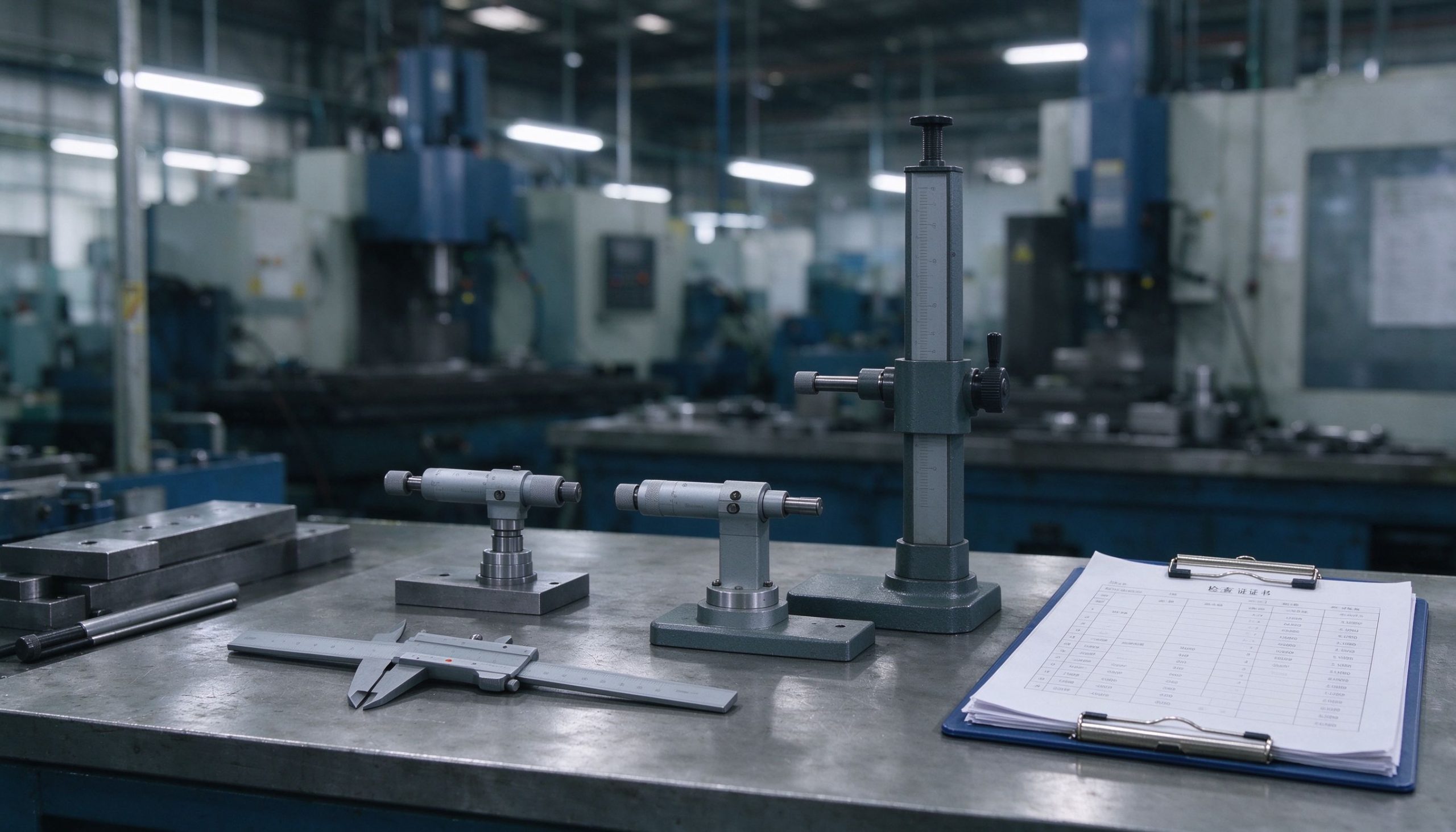
When a buyer audits a CNC machining supplier, one of the first questions is which certifications do you hold? You will see "ISO 9001" everywhere, and "IATF 16949" far less often. Both are quality-management standards, but they are not equivalent — and choosing a supplier without understanding the difference can get your parts rejected at the customer's audit.
This guide explains what ISO 9001 and IATF 16949 actually mean, when each matters, and which one your precision-parts supplier needs.
What ISO 9001 is
ISO 9001 is the general quality management system (QMS) standard. It applies to almost any industry — manufacturing, services, software, healthcare. It requires a documented process approach: defined responsibilities, controlled documents, internal audits, corrective action and continuous improvement.
ISO 9001 proves that a factory runs a controlled, repeatable management system. It does not guarantee automotive-specific defect prevention or supply-chain rigor. PufferGo has held ISO 9001 since 2013.
What IATF 16949 adds
IATF 16949 is the automotive-specific quality standard, built on top of ISO 9001. You cannot hold IATF without also satisfying ISO 9001. It adds automotive-sector expectations:
- Defect prevention rather than detection — think mistake-proofing (Poka-Yoke) and error-proofed processes.
- Risk-based thinking across the supply chain, with mandatory supplier controls.
- Core tools such as APQP (advanced product quality planning), FMEA (failure mode analysis), SPC (statistical process control) and PPAP (production part approval).
- Focus on continuous improvement and customer-specific requirements.
In short: IATF 16949 is ISO 9001 plus a heavy automotive layer aimed at zero-defect delivery.
The key differences
| Factor | ISO 9001 | IATF 16949 |
|---|---|---|
| Scope | Any industry | Automotive only |
| Relationship | Base standard | Built on top of ISO 9001 |
| Defect approach | Process control | Prevention + SPC + PPAP |
| Supplier control | General | Mandatory, audited |
| Typical buyer | General industrial, medical, consumer | Automotive OEMs & Tier-1/2 |
Which does your supplier need?
- General machined parts, enclosures, brackets, consumer hardware → an ISO 9001-controlled shop with disciplined inspection is usually sufficient.
- Automotive components, especially safety-related or high-volume Tier-supplied parts → you need IATF 16949. It is often a hard requirement to even quote into an automotive program.
- Medical device components → medical buyers apply their own regulatory expectations (often tied to ISO 13485 on the device side) and audit traceability closely; see CNC machining vs casting for medical devices for how process choice interacts with that audit.
Holding both credentials signals that a factory can serve general and automotive buyers under one controlled roof — which is exactly the position PufferGo operates from.
Why the certification matters beyond the paper
A real QMS is what lets a supplier scale without losing quality. The same controlled processes that satisfy an audit are what carry your program from the first prototype to volume — which is why we recommend reading from prototype to production alongside this guide.
PufferGo supplies custom fasteners and CNC parts to automotive and industrial buyers across 50+ export markets from our 12,000 m² Dongguan facility, backed by 50 imported 5-axis machines, 8 production lines and a 99.2% first-pass yield. You can read more about who we are on the about page. A decade of focus, only precision parts done right.
The bottom line
ISO 9001 proves a controlled quality system; IATF 16949 proves an automotive-grade, defect-prevention system built on top of it. If you source automotive parts, IATF 16949 is non-negotiable. For general precision hardware, ISO 9001 plus strong inspection discipline is the floor — and dual certification gives you headroom to grow.
Audit checklist ready? Contact our quality team at sales@puffergo.com / +86 138 1234 5678 — we will share our certification scope and audit documentation before your first parts.
0 Comments