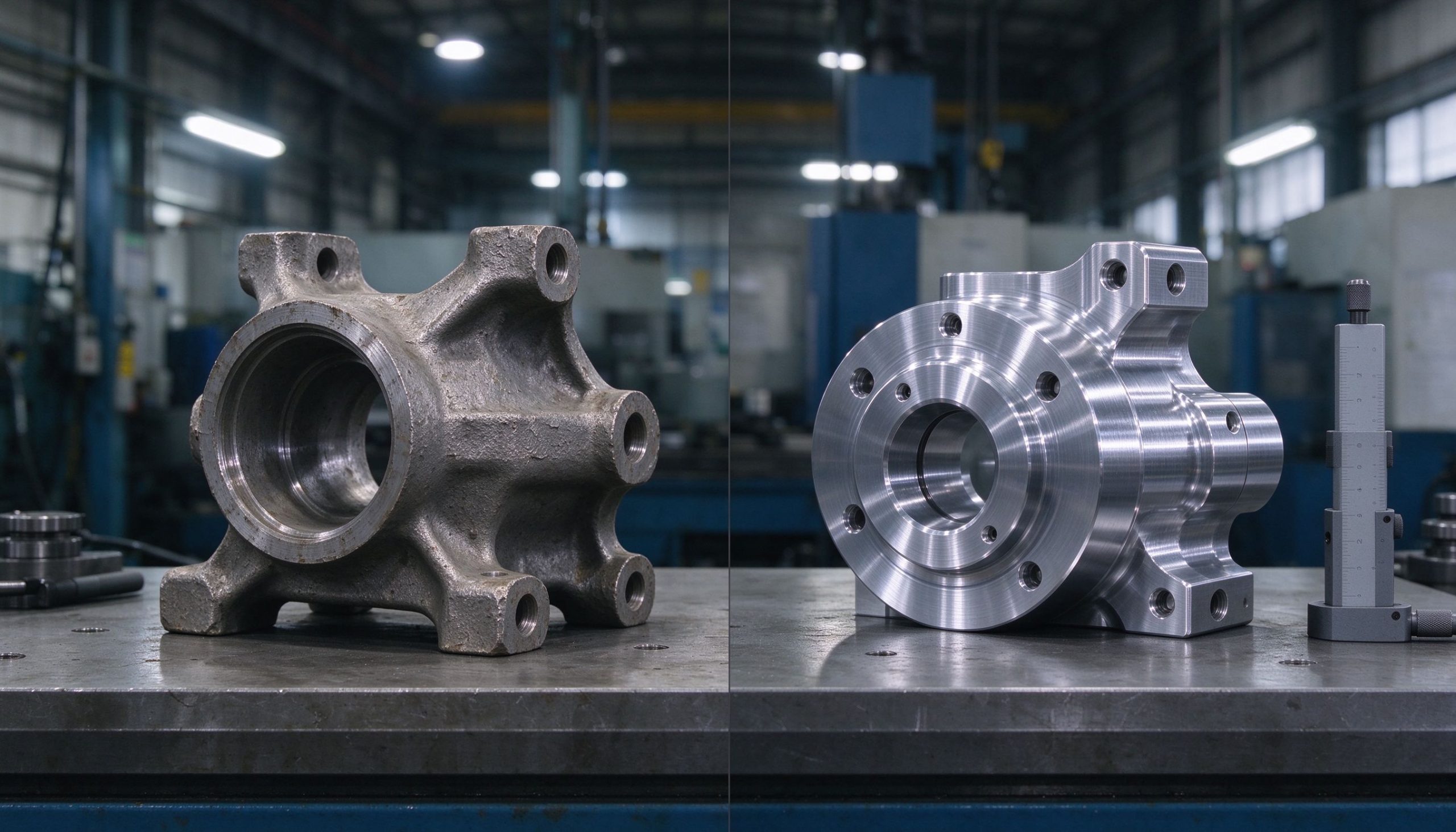
Medical device engineers constantly weigh CNC machining for medical devices against casting — investment casting, die casting or metal injection molding (MIM). Both can produce a stainless or titanium bracket, housing or implant-adjacent component, but they win in very different situations. The wrong choice shows up later as tolerance failures, loose surface finish or tooling cost that never pays back.
This guide compares the two processes on the factors that matter to OEMs shipping to North America and Europe: tolerance, lead time, material control, cost breakpoints and regulatory friendliness.
Tolerance and dimensional control
The first and most decisive difference is repeatability.
Cast parts solidify in a mold. Shrinkage is predictable but not perfect, porosity is always a risk, and as-cast surfaces need machining on critical mating faces anyway. Typical as-cast tolerances land around ±0.1–0.3 mm, and every tight feature still gets post-machined.
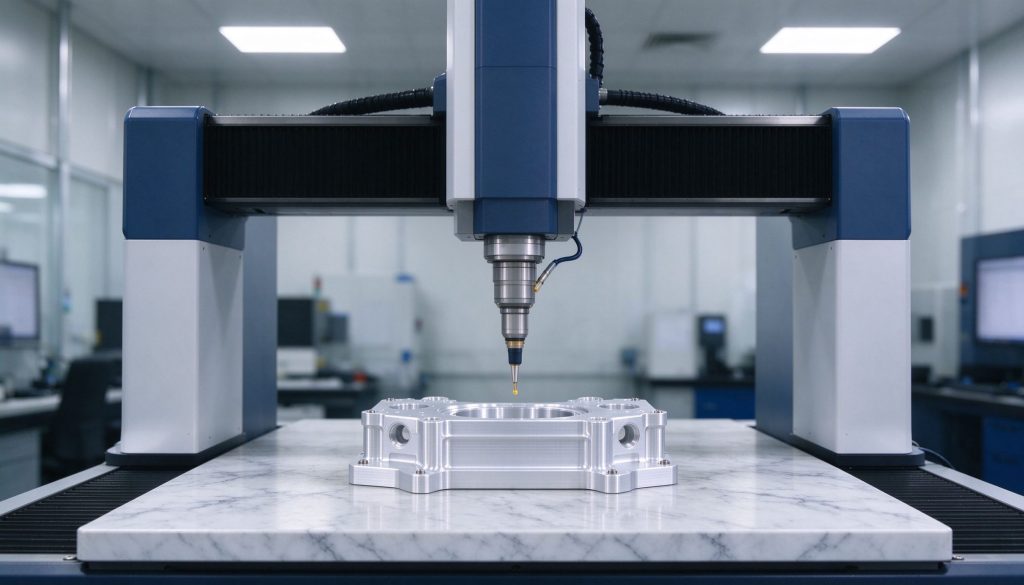
CNC-machined parts start from a solid billet or bar and cut to the drawing. Features reference a controlled datum frame, and critical interfaces hold ±0.005–0.02 mm directly. For medical components that must mate precisely with sensors, seals or other device housings, machining removes the "machine the casting anyway" step entirely.
Lead time and flexibility
- Casting needs hard tooling — dies or ceramic molds — that takes weeks to make and costs thousands before a single part ships. It only makes sense at high volumes.
- CNC machining needs no dedicated tooling. Upload a STEP file and parts can be running in days.
That is why machining dominates prototyping, low-to-mid volume production and design iteration. When your device is still in clinical or validation phases, changing a casting tool after each revision is expensive and slow. Machining absorbs design changes at near-zero tooling penalty.
Material and mechanical properties
Cast material properties depend heavily on mold fill, cooling and post-process heat treatment, and porosity can hide fatigue-critical defects. Machined billet comes from certified wrought stock with documented grain structure and traceable heat-lot records — a meaningful advantage when your quality system demands material certificates per batch.
Stainless 316L and titanium Ti-6Al-4V, the workhorses of medical hardware, machine reliably and come with full material traceability. We detail the trade-offs in our CNC machining materials guide.
Surface finish and biocompatibility prep
Medical parts often require Ra 0.8 µm or better, passivation to remove free iron, or a specific anodized / bead-blasted appearance. Machined surfaces reach these finishes predictably, and the secondary processes line up cleanly — covered in our guide to CNC surface finish options. Cast surfaces carry a rougher as-cast skin that must be removed on nearly every visible or wetted surface.
Cost breakpoint
There is a real crossover, and it is not as early as many engineers assume:
- Below roughly 5,000–10,000 units, CNC machining almost always wins once casting tooling is amortized.
- Above that, casting's per-piece cost advantage can take over for near-net-shape geometries.
For most medical device programs — low volumes, high mix, frequent revisions — the crossover rarely arrives before the product matures. Machining is the safer default.
Regulatory and quality system fit
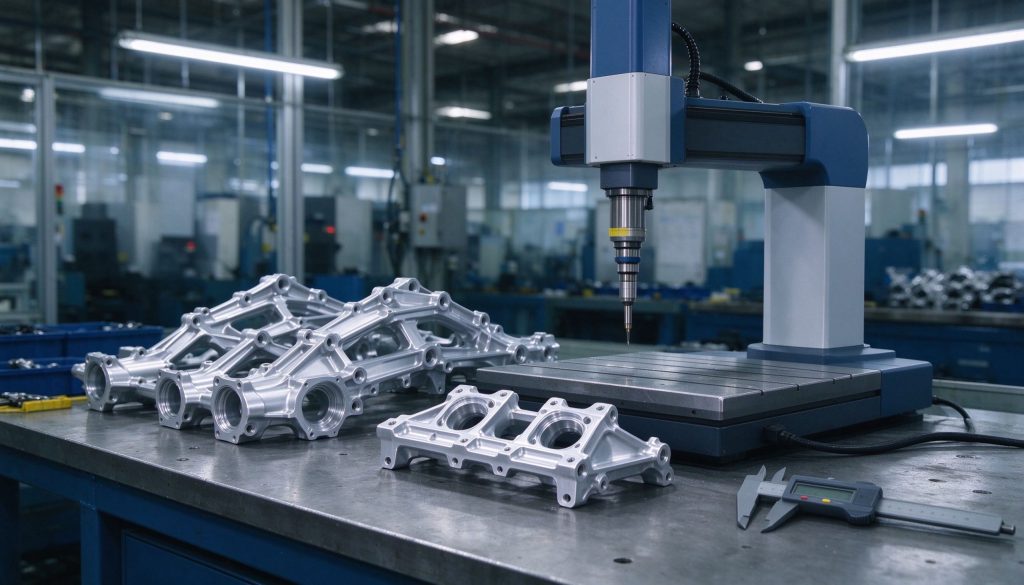
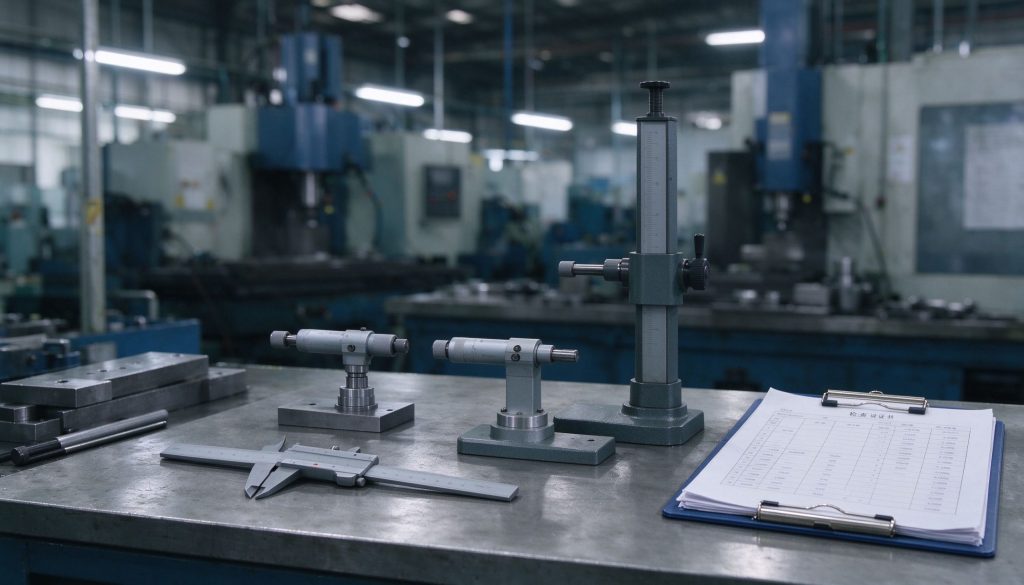
Medical buyers audit suppliers. A machined-part workflow with ISO 9001-controlled inspection, FAI reports and lot traceability integrates cleanly into your design-history file. At PufferGo, our factory holds ISO 9001 (certified since 2013) and IATF 16949, and we explain the difference in ISO 9001 vs IATF 16949.
You can see the result in practice in the Mediprec GmbH medical device case study, where tight-tolerance stainless components moved from prototype to validated production.
Which should you choose?
Choose CNC machining when: volumes are under ~10k, tolerances are tight, design is still evolving, or material traceability and clean surfaces are non-negotiable. Choose casting only when geometry is near-net, volumes are very high, and you can live with looser as-cast tolerances plus secondary machining.
PufferGo ships precision CNC machined parts to medical brands across 50+ export markets from our 12,000 m² Dongguan facility, with a 99.2% first-pass yield. A decade of focus, only precision parts done right.
Comparing a casting quote against machining? Send us your drawing at sales@puffergo.com / +86 138 1234 5678 — we will give you an honest process recommendation, not just a quote.
0 Comments